
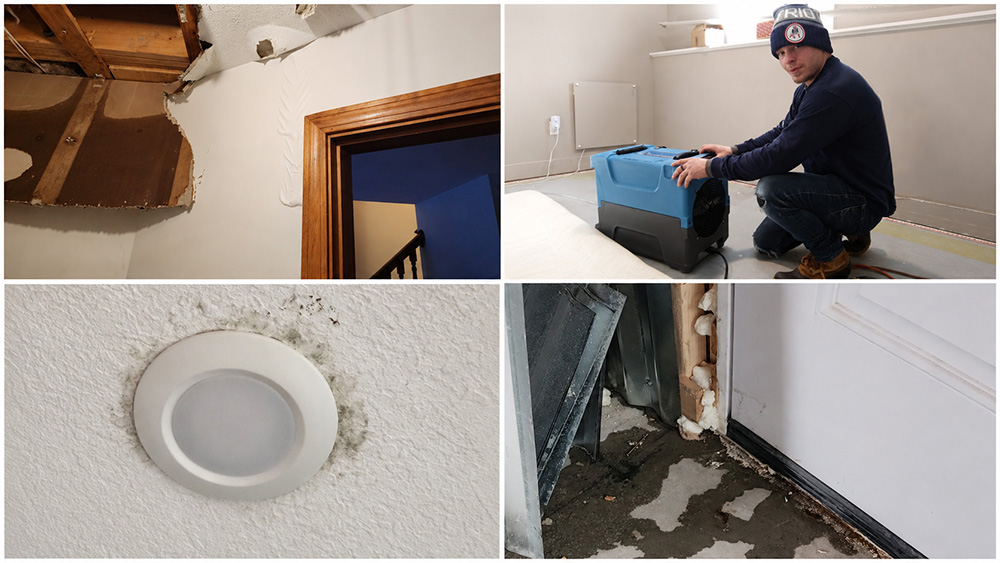
Water damage is not always obvious at first. In many homes, the earliest warning signs show up in small details that are easy to overlook, such as bubbling paint, staining around fixtures, or dampness near a doorway. Over time, these issues can lead to structural damage, mold growth, and more expensive repairs.
Knowing what to look for can help you act quickly and prevent a minor problem from becoming a major one. Below are four common signs of hidden water damage and why they should never be ignored.
1. Damaged or Sagging Ceilings Can Point to a Serious Leak
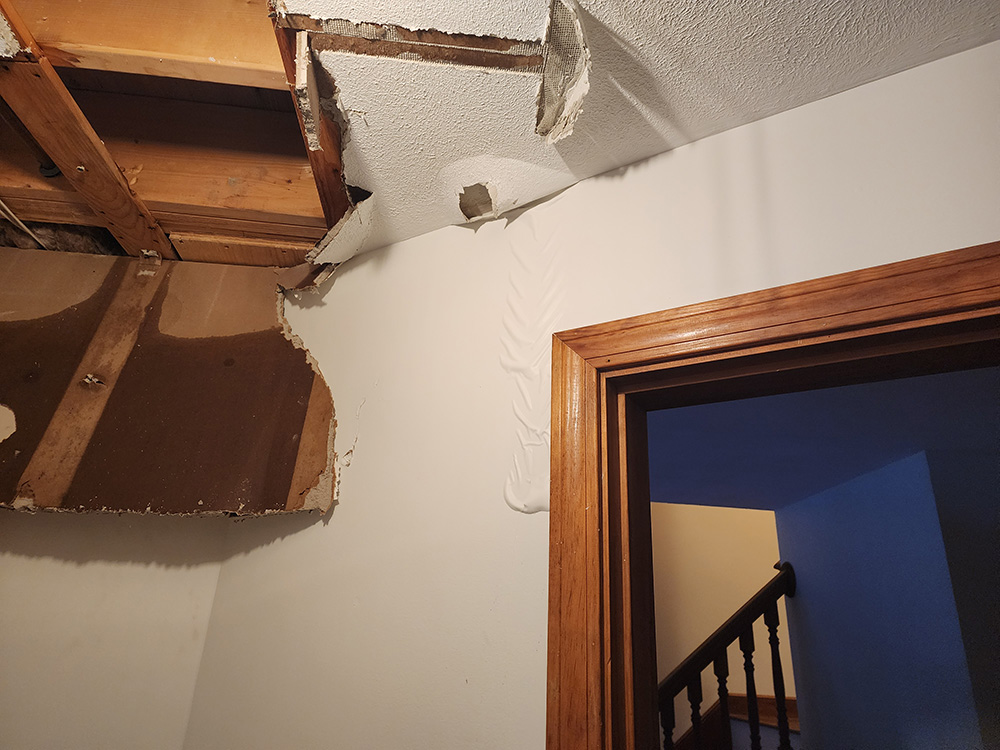
One of the clearest signs of water intrusion is visible damage to a ceiling or upper wall. If drywall begins to sag, crumble, stain, or break apart, there is a good chance water has been entering the area for some time. In more severe situations, sections of the ceiling may begin to pull away, exposing framing and damaged materials underneath.
This type of damage can be caused by roof leaks, plumbing problems, or water traveling from an upper level of the home. Even if the leak appears to have stopped, the materials may still be holding moisture.
Why it matters:
- Wet drywall loses strength quickly
- Hidden moisture can spread into insulation and framing
- Mold can begin growing in damp materials
- Repairs become more expensive the longer the problem is left untreated
If you notice ceiling damage, it is important to have the affected area inspected as soon as possible.
2. Water Staining Around Light Fixtures May Mean Moisture Is Trapped Above
Discoloration around a recessed light or ceiling fixture often points to hidden moisture above the ceiling surface. You may see yellowing, gray staining, dark spotting, or signs that the paint or texture is beginning to change.
This can happen when water slowly enters the ceiling cavity from a plumbing leak, roof issue, or condensation problem. Because the area around a fixture is a natural opening in the ceiling, moisture often becomes visible there before it appears anywhere else.
Warning signs to watch for:
- Brown or gray rings around the fixture
- Dark spotting that may suggest mold growth
- Peeling texture or paint
- A musty smell in the room
When moisture is left in place, it can damage surrounding materials and create conditions for mold to grow.

3. Dampness Near Doors and Base Areas Should Never Be Ignored
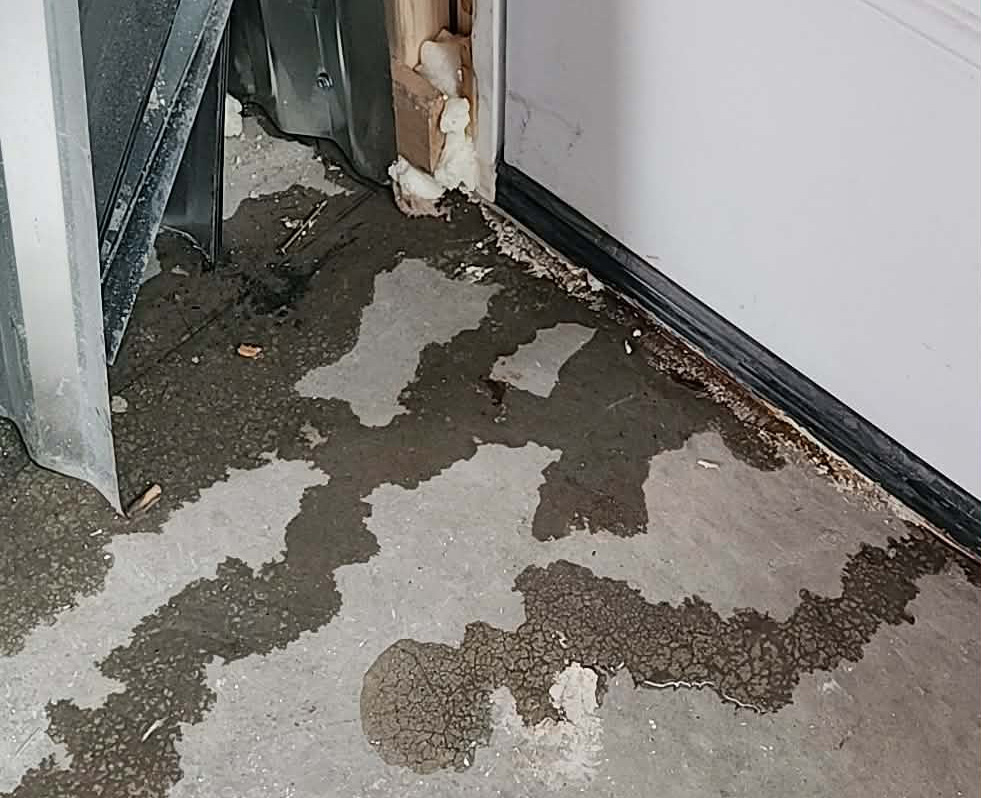
Water damage is not always dramatic. Sometimes it starts with damp flooring, staining near a door, or deterioration around trim and lower wall areas. These signs may suggest water is entering from outside, leaking from nearby plumbing, or pooling in low areas of the home.
Door frames and thresholds are especially vulnerable because water can collect there and soak into surrounding materials. Over time, this can damage trim, drywall, flooring, and framing.
Common causes include:
- Water entering under or around exterior doors
- Plumbing leaks nearby
- Foundation or drainage problems
- Previous flooding that was not fully dried
If a damp area keeps returning, the source should be identified quickly. Repeated moisture can lead to rot, odor issues, and hidden structural damage.
4. Professional Drying Equipment Helps Prevent Long-Term Damage
Once water damage is discovered, proper drying is one of the most important parts of the restoration process. Drying equipment such as air movers and dehumidifiers helps remove trapped moisture from building materials and reduce the risk of secondary damage.
A surface may look dry even when moisture remains inside the flooring, drywall, or framing. That is why professional drying is so important after a leak or flood. Quick action helps reduce the chance of mold growth and can help save more of the affected materials.
A professional response may include:
- Moisture inspection and assessment
- Water extraction if needed
- Strategic placement of drying equipment
- Monitoring to make sure materials are drying properly
- Recommendations for cleanup and repairs
The sooner drying begins, the better the chance of limiting damage and restoring the space safely.

When to Call a Water Damage Restoration Professional
If you notice signs like ceiling damage, staining, damp flooring, or musty odors, it is best not to wait. Water often travels farther than it first appears, and what looks like a small issue on the surface may be affecting materials behind the walls or above the ceiling.
A professional inspection can help determine the source of the problem, identify hidden moisture, and recommend the right next steps.
If your home has water damage, Water & Flood Restoration Maine is here to help with inspection, cleanup, drying, and restoration services.